

High TDS in Chennai Water? What Your RO Purifier Should Do
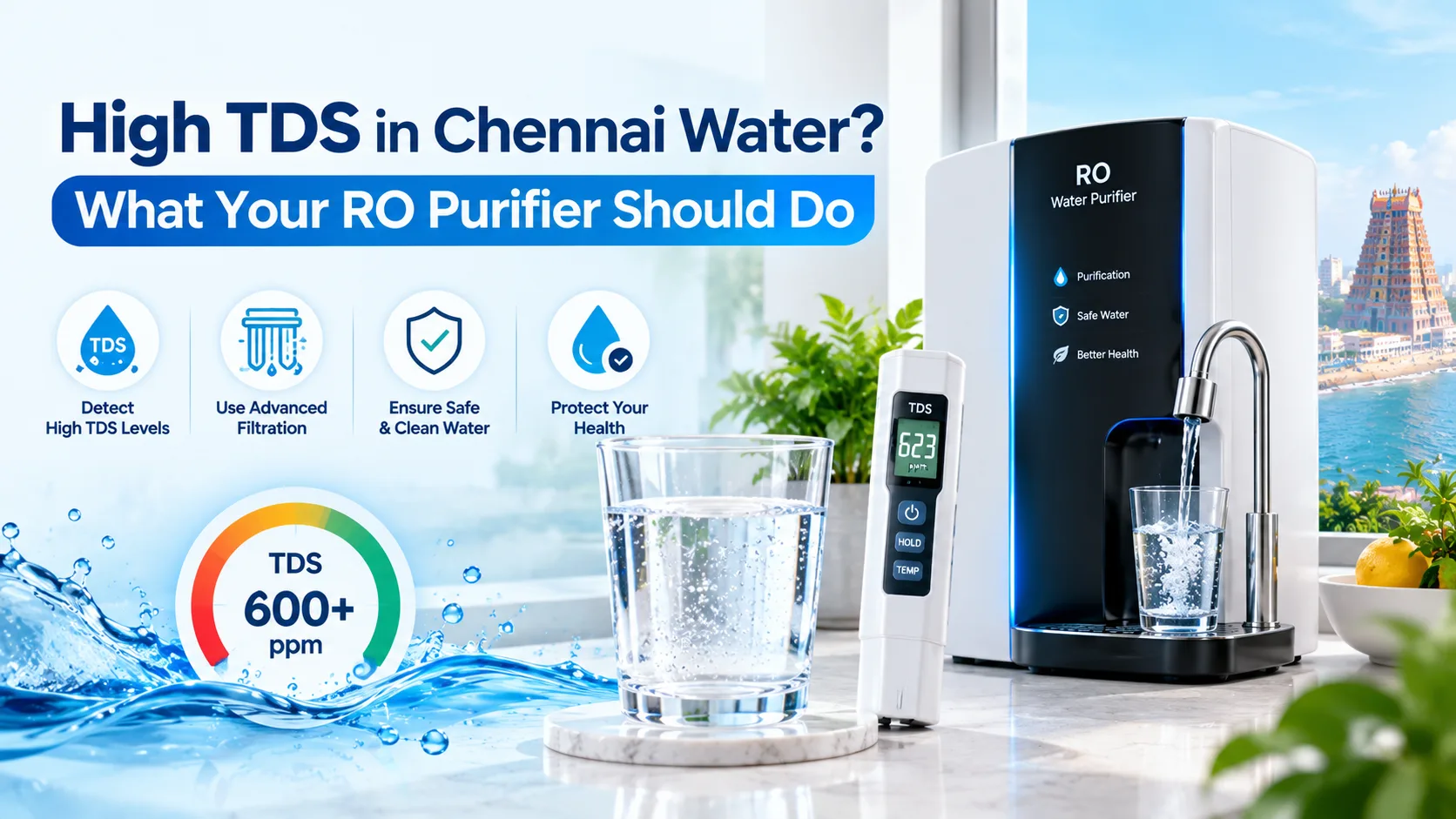
Chennai's water supply, while essential, often presents a unique challenge: high Total Dissolved Solids (TDS). This can impact not just the taste of your drinking water, but also your health. Understanding what TDS means and how your RO water purifier, especially one with a mineraliser, can effectively address this issue is crucial for every Chennai household.
What is TDS and Why Does it Matter?
Total Dissolved Solids (TDS) refer to the concentration of all inorganic and organic substances present in water, which are molecularly dissolved. These include minerals, salts, metals, and some organic matter. In Chennai, the TDS levels can vary significantly depending on the source – whether it’s borewell water, municipal supply, or a combination. High TDS is often due to the geological composition of the region's groundwater, along with industrial and agricultural runoff.
While some minerals are beneficial, excessively high TDS can lead to several problems. It can alter the taste of water, making it unpalatable, and in some cases, indicate the presence of harmful contaminants. More importantly, consistent consumption of water with very high TDS can have long-term health implications.
Understanding Safe Drinking Water TDS Levels
The Bureau of Indian Standards (BIS) specifies desirable limits for various parameters in drinking water. For TDS, the desirable limit is 500 mg/L (parts per million), with a permissible limit of 2000 mg/L in the absence of an alternate source. However, most people find water with TDS above 300 mg/L to have a noticeable taste. Water below 100 mg/L, while chemically pure, can taste flat due to the absence of minerals.
The optimal range for palatable and healthy drinking water, where essential minerals are present but contaminants are minimal, is generally considered to be between 100-300 mg/L. Given that Chennai's tap water often exceeds 500 mg/L, a robust purification system is a necessity.
Why RO+ Mineraliser is Ideal for Chennai's Water
Reverse Osmosis (RO) technology is highly effective at removing dissolved solids, including heavy metals, salts, and other impurities, by forcing water through a semi-permeable membrane. For Chennai's typically high TDS water, an RO system is often the most suitable solution.
The Role of RO
- Effective Purification: RO purifiers excel at reducing TDS by up to 90-99%, ensuring contaminants like lead, arsenic, fluoride, and excessive salts are filtered out.
- Addressing Chennai's Specific Needs: Given the varying and often high TDS in Chennai's water sources, an RO system provides comprehensive purification that other filters (like UV or UF) alone cannot achieve for dissolved solids.
The Importance of a Mineraliser (RO+)
While RO is excellent at purification, it can sometimes remove beneficial minerals like calcium and magnesium along with the impurities. This can result in water that tastes bland and lacks essential nutrients. This is where an RO+ Mineraliser system becomes invaluable.
- Restoring Essential Minerals: A mineraliser adds back a balanced amount of essential minerals to the purified water, ensuring it's not just clean but also healthy and tastes good.
- Maintaining pH Balance: Removing all minerals can sometimes make water slightly acidic. A mineraliser helps maintain a healthy pH balance, which is crucial for overall well-being.
- Enhanced Taste: The re-introduction of minerals significantly improves the taste of the water, making it more refreshing and enjoyable to drink.
For Chennai residents, an RO water purifier with a mineraliser is often the recommended choice to tackle high TDS effectively while ensuring the water remains healthy and palatable.
How to Test Your Water's TDS at Home
Regularly monitoring your water's TDS level is a simple yet effective way to ensure your RO purifier is functioning optimally. A handheld TDS meter, readily available online and at electronics stores, can provide instant readings.
Steps to Test:
- Collect Sample: Fill a clean glass with water from your RO purifier's tap.
- Dip Meter: Turn on your TDS meter and immerse its electrodes into the water sample.
- Read Display: Wait a few seconds for the reading to stabilize. The number displayed is your water's TDS in mg/L (or ppm).
- Compare: Test your raw tap water and then your purified water. A significant reduction (typically 90% or more) indicates your RO membrane is working well.
If your purified water's TDS is consistently higher than expected or close to the raw water's TDS, it's a clear sign that your purifier needs attention.
When Your RO Membrane Needs Attention
The RO membrane is the heart of your purification system. Over time, it can get clogged with dissolved solids, reducing its efficiency. Knowing when to replace it is vital for continuous access to clean water.
Signs of a Failing Membrane:
- Reduced Water Flow: If your purifier is dispensing water very slowly, it often indicates a clogged membrane.
- Poor Water Taste: A noticeable change in taste, especially a metallic or salty flavour, can mean impurities are passing through.
- High TDS Output: As shown by your home TDS test, if the purified water's TDS level is increasing, the membrane's ability to filter is compromised.
- Increased Wastewater: A healthy RO system typically produces a certain amount of wastewater. If this ratio changes significantly (more wastewater, less purified water), the membrane might be struggling.
The lifespan of an RO membrane depends on the initial TDS level of your water and usage, but typically ranges from 12 to 24 months. Regular servicing and timely membrane replacement by a professional like Janani Cool Care ensure your purifier continues to deliver safe, healthy drinking water.
Maintain Your RO for Optimal Performance
Beyond the RO membrane, other filters like the sediment filter and activated carbon filter also play crucial roles and require periodic replacement. Neglecting these components can put extra strain on the RO membrane and reduce overall purification efficiency.
To ensure your RO water purifier consistently provides clean, healthy water, regular maintenance is indispensable. Consider opting for an Annual Maintenance Contract (AMC) or Comprehensive Maintenance Contract (CMC) with a trusted service provider like Janani Cool Care. Our expert technicians in Chennai are equipped to handle all aspects of RO purifier repair, installation, and maintenance, ensuring your family always has access to the best quality drinking water. Don't compromise on your health – let us keep your purifier running efficiently.
Read next
How Often to Change RO Filters with Chennai Hard Water
Discover how often to change your RO filters in Chennai, considering local hard water from metro or borewell sources, an...
Read ArticleWashing Machine Smells or Leaves Residue? A Hard-Water Fix
Is your washing machine leaving clothes smelly or with white residue? Chennai's hard water, incorrect detergent use, and...
Read ArticleHow to Lower Your Refrigerator Power Bill in Chennai Summer
Combat Chennai's summer heat and high electricity bills by optimizing your refrigerator's performance. Learn practical t...
Read Article